
Administrators
Featured Resource
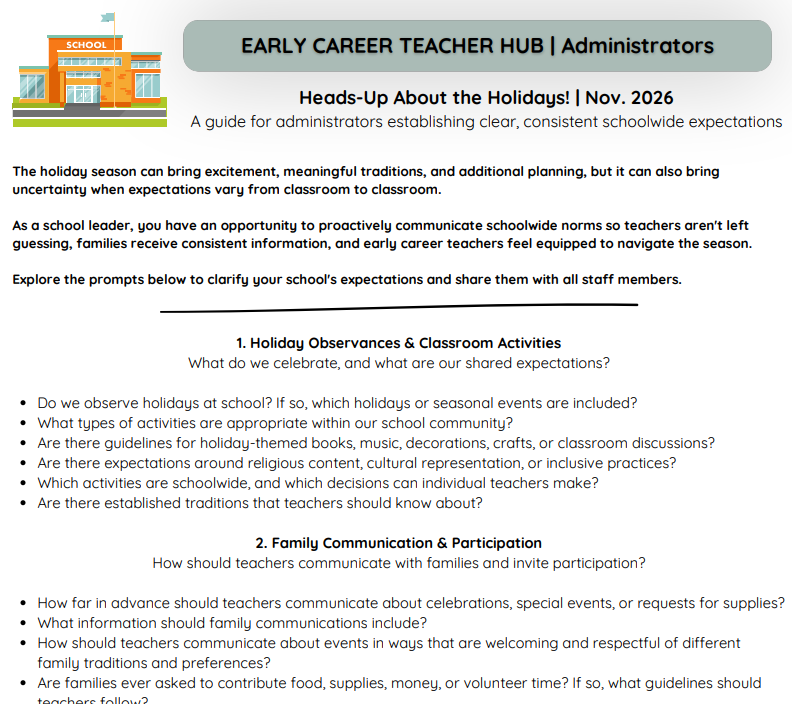
A school administrator planning guide for establishing clear holiday celebration expectations, supporting inclusive classroom activities, and communicating consistent schoolwide guidance to teachers.
Holiday traditions and classroom celebrations can look different from one teacher to the next, leaving early career educators unsure of what's expected. This reflection and planning resource helps administrators clarify schoolwide norms around holiday observances, family communication, student participation, supplies, and classroom activities. Use the prompts to identify district or school guidelines, distinguish shared expectations from areas of teacher flexibility, and communicate consistent guidance to all staff members. By making unwritten expectations explicit, school leaders can reduce confusion and help teachers create thoughtful, inclusive experiences for their students.
Heads-Up About the Holidays:
Establishing Clear Schoolwide Expectations
Ready to Go Deeper?

Looking for targeted support for your school or district? Christina offers workshops designed specifically around new teacher retention, coaching strategies, and educator wellness.
Be In the Know!
New tips, tools, and downloads are added regularly to the ECT Hub. Subscribe to our Team Meline community to be the first to know.
From the Archives
October 2026
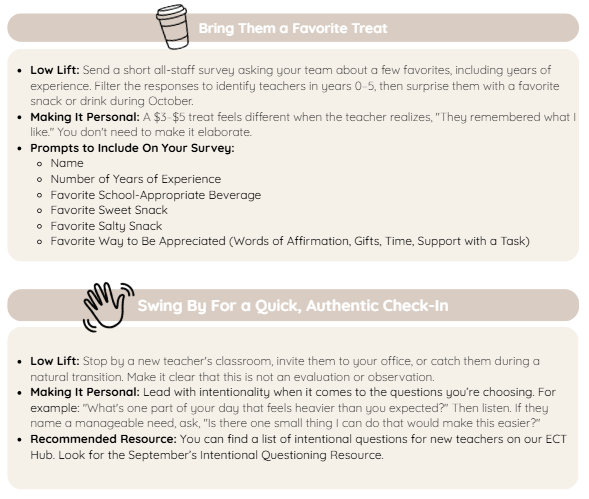
Practical ways school administrators can support early career teachers through personalized encouragement, thoughtful check-ins, and simple teacher appreciation gestures during October.
By October, the demands of teaching can begin to feel especially heavy for early career educators. Small, intentional gestures from school leaders can remind new teachers that they are seen, valued, and supported. This quick-reference resource shares three low-lift ways administrators can encourage teachers in their first five years, including bringing a favorite treat, sending a personal message of encouragement, and making time for a brief, no-agenda check-in. Copy-and-customize templates make it easy to put these ideas into practice without adding another major task to your schedule.
October Pick-Me-Ups for Early Career Teachers
September 2026
Beyond “How’s It Going?”: Intentional Check-In Questions for Early Career Teachers is a quick-reference tool designed to help school leaders move beyond surface-level check-ins and create more meaningful conversations with new teachers. The questions invite reflection around support, workload, autonomy, school culture, confidence, and professional growth while communicating that the teacher’s perspective matters. Choose one or two questions that fit the moment—during a scheduled meeting, in an email, or even in a quick hallway conversation—and use what you hear to guide follow-up, clarification, and support.
Intentional Questioning
August 2026
Christina provides a brief summary and implications for schools based on the resource: The Future Begins with Z: Nine Strategies to Lead Generation Z as They Disrupt the Workplace by Tim Elmore.
As more Gen Z educators enter the profession, school leaders have an opportunity to better understand the experiences, strengths, and support needs shaping this generation. The following resource includes a brief summary of Tim Elmore’s book, The Future Begins with Z, along with practical applications for leading, developing, and retaining early career teachers.
The resource also explores how administrators can make unspoken expectations more explicit, connect daily responsibilities to a meaningful mission, balance autonomy with clear guidance, and create a culture of trust, listening, and constructive feedback. The goal is not to stereotype Gen Z educators, but to build stronger bridges across generations and create conditions where early career teachers are valued as both learners and contributors.
The Future Begins with Z - Book Summary

Before your next teacher interview, take time to prepare a clear, specific answer to one of the most important questions early career candidates may ask: “How will I be supported here?”
June 2026
Intentional Interviews
One of the most common questions teacher candidates ask is: “What do you do to support new teachers?” Before your next interview, take a few minutes to prepare a specific, honest answer.
Consider sharing:
What support is already in place: mentoring, coaching, onboarding, professional development, team meetings, check-ins, or resources.
How often support happens: weekly, monthly, quarterly, during planning time, after observations, or through scheduled meetings.
Who provides the support: mentor teachers, instructional coaches, administrators, department leads, or outside partners.
How mentors are supported: training, resources, protected time, guidance, or administrative check-ins.
What your next step is: if formal support is still developing, name what you are working toward and how you plan to walk alongside new teachers.
A clear, specific response helps candidates see that they will not be expected to navigate their first years alone.